Grooming a Cat That Hates Being Brushed

Cats groom themselves competently, which is why people assume brushing is optional. For short haired cats it mostly is. For long haired cats it isn't, and for older cats that have stopped grooming properly it's essential.
The problem is that most cats who hate the brush learned to hate it during one session that went on too long.
Why it matters more than it looks
A cat's tongue is covered in backward facing barbs that catch loose fur, which then gets swallowed. More loose fur means more hairballs, and in long haired cats that can occasionally become an obstruction rather than an inconvenience.
Matting is the bigger issue. Mats tighten over time, pulling on the skin continuously, and the skin underneath becomes inflamed and sometimes infected. A badly matted cat is in low grade constant pain, and because cats hide discomfort, it goes unnoticed.
The right tool
| Tool | For | Notes |
|---|---|---|
| Grooming glove | Nervous cats, short hair | Feels like stroking. The best starting point for a cat that hates brushes |
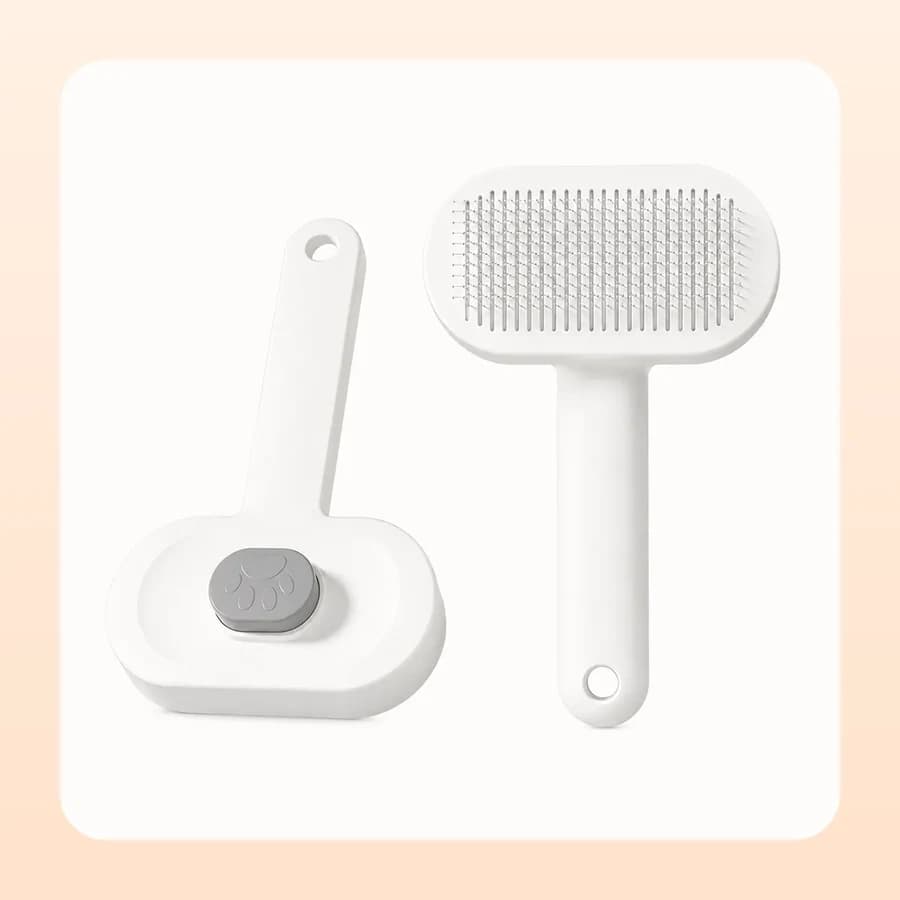
| Soft slicker brush | Long hair, general use | Fine wire pins. Use light pressure; heavy handling scratches the skin |
| Wide tooth comb | Finding and working mats | The tool that tells you what's actually going on in the coat |
| Deshedding tool | Heavy moulters | Effective and easy to overdo. Once a week at most |
For a cat that already runs from the brush, start with a glove. It reads as stroking rather than as an implement, which sidesteps the association entirely.
Where to start on the body
This matters more than most guides suggest. Cats have areas they enjoy being touched and areas they tolerate at best, and starting in the wrong place ends the session before it begins.
- 1Cheeks and under the chin. Scent glands here, and most cats actively enjoy it. Always start here.
- 2Along the top of the head and down the neck.
- 3The back, from shoulders to hips, in the direction the fur lies.
- 4The sides, gradually.
- 5Belly, legs, tail: last, briefly, and only if the cat is relaxed. Many cats never accept these and that's a normal outcome, not a failure.
The base of the tail is a common flashpoint. Plenty of cats find it overstimulating and will turn and grab your hand. That's not aggression so much as a threshold being crossed.
The rebuild
For a cat that already flees, work in very short sessions over a fortnight:
- 1Days 1 to 3: leave the brush out where the cat can investigate it. Treats near it. Brush nothing.
- 2Days 4 to 6: two strokes on the cheek during a normal stroking session, then stop and carry on stroking.
- 3Days 7 to 10: five to ten seconds of brushing, then stop while the cat is still settled.
- 4Day 11 on: build to thirty to sixty seconds. That's the target, and it's enough.
The rule that does most of the work: stop before the cat wants you to. Once a cat has had to leave, the next session starts from a worse position, and you'll spend two weeks getting back.
Watch for the early signals rather than waiting for a swipe: tail flicking, skin rippling along the back, ears rotating sideways, a turn of the head towards your hand. All of those mean finish now.
Dealing with mats
Work a wide tooth comb through the coat regularly and you'll find them before they're a problem. Common spots are behind the ears, in the armpits, on the belly and along the trousers at the back of the hind legs.
Small, loose mats can be teased apart with fingers first, holding the fur at the base so you're not pulling on the skin, then combed out from the tip inwards. Never pull.
How often
- Short haired: once or twice a week, more during the spring and autumn moults.
- Long haired: daily, ideally. Sixty seconds is enough if it's genuinely daily.
- Elderly or arthritic: daily, gently, with extra attention to the lower back and hips where the cat can no longer reach.
- Overweight: same as elderly, for the same mechanical reason.
Daily and brief always beats weekly and thorough. That's true of nearly every handling task with cats, and it's the thing people find hardest to accept because it feels like it isn't achieving much. It is.
Common questions
Start with a grooming glove rather than a brush, work only on the cheeks and back at first, and keep sessions to under a minute. Stop before the cat wants you to. Ending while it's still settled is what makes the next session easier.
Short haired cats once or twice a week, more during moults. Long haired cats daily, though sixty seconds is enough if it's genuinely every day. Elderly, arthritic and overweight cats need daily help with the lower back.
No. Mats lift the skin into them, so there's rarely the gap you think there is, and cutting mats out is a common cause of serious lacerations. Tight or extensive matting should go to a vet or professional groomer.
Usually arthritis, dental pain or obesity making it physically hard to reach. A previously well kept cat developing a scruffy coat over the lower back is worth a vet appointment rather than just more brushing.
Sources
We’re a retailer, not a veterinary practice. Anything clinical on this page comes from these, and your own vet knows your animal.

The Kindral Team
Pet supplies buyers & product testers
We buy, unbox and use the kit we sell: beds, feeders, tanks, harnesses, the lot. We write about what holds up and what doesn't, and we say plainly when a product isn't right for a particular pet. We are not veterinarians: anything touching health, diet or medication is sourced to a qualified body and linked, and we'll always tell you to ask your own vet about your own animal.