Do Cats Really Need a Water Fountain?

Cats are strange about water. They'll ignore a full bowl for a day, then drink from a dripping tap, a plant saucer, or the glass you just put down. That isn't fussiness for its own sake.
The desert ancestry problem
The domestic cat descends from the African wildcat, an animal that lived where standing water was scarce and got most of its water from what it killed. A mouse is roughly seventy percent water. A cat eating whole prey barely needs to drink at all, so the thirst response never had strong selection pressure on it.
Feed that animal dry kibble, which is around eight percent moisture, and the arithmetic breaks. The cat needs to make up the difference by drinking, and its thirst drive isn't built to notice.
The result is a cat running slightly dehydrated most of the time, producing small volumes of very concentrated urine.
Why a bowl underperforms
Three things put cats off a standing bowl.
Still water in a bowl goes stale and picks up dust, and cats have a far better sense of smell than we do. In the wild, still water is more likely to be contaminated than moving water, and cats behave accordingly.
Then there's whisker contact. A narrow, deep bowl presses on the whiskers every time the cat lowers its head, and whiskers are dense with nerve endings. Plenty of cats respond by drinking less rather than putting up with it.
And placement. A water bowl next to the food bowl is normal for us and slightly wrong for a cat: in the wild, water near a carcass is water near contamination. Cats often drink better from a source in a different room entirely.
What a fountain actually changes
Moving water is fresher, because circulation and filtration keep it aerated and clear of dust. It's also more visible and more audible, so it prompts drinking rather than waiting to be noticed. That's the mechanism, and for a good proportion of cats it produces a real increase in intake.
Not all of them, though. Some cats are indifferent, and a minority are put off by the pump noise. It's worth being honest about that rather than promising a universal result.
The thing that beats a fountain
Wet food is around seventy-five to eighty percent water, close to what a cat would get from prey. Switching some or all of a cat's ration from dry to wet does more for total water intake than any fountain will.
A reasonable approach for most households: wet food as the main ration, dry available or used in puzzle feeders for enrichment, and a fountain as the drinking source. That covers hydration from both directions.
Practical rules for water placement
- Several water sources around the house, in different rooms from the food.
- Away from the litter tray. Obvious, frequently ignored in small flats.
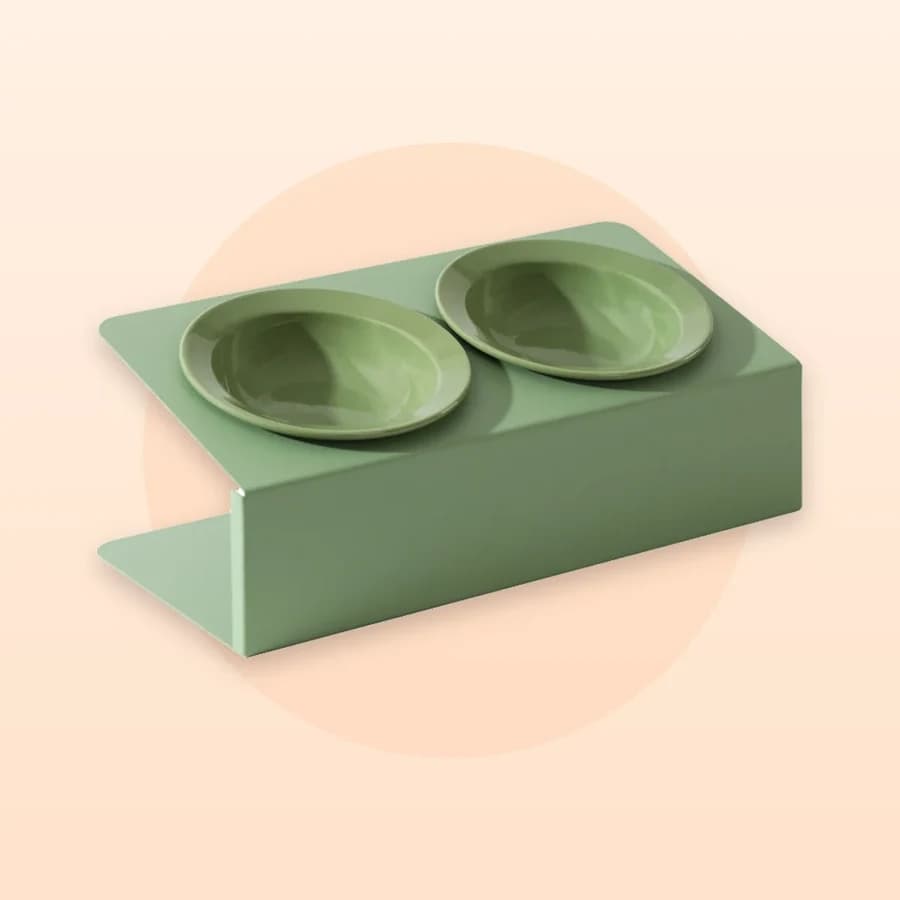
- Wide and shallow beats narrow and deep, whether it's a bowl or a fountain bowl.
- Ceramic or stainless over plastic. Plastic scratches, holds bacteria, and some cats react to it with chin acne.
- Change bowl water at least daily. Rinse a fountain weekly and change its filter on schedule, or you've built an expensive stale-water dispenser.
So: worth it, with caveats. If your cat already eats wet food and drinks normally, a fountain is a nice-to-have. If your cat is on dry food, is older, or has any urinary history, increasing water intake is a genuine health measure and a fountain is one of the easier ways to do it.
Common questions
Many do. Moving water stays fresher and is more noticeable, which prompts drinking. It doesn't work on every cat, and some are put off by pump noise. Wet food raises total water intake more reliably than any fountain.
Roughly 50–60 ml per kg of body weight per day from all sources, so about 200–250 ml for a 4 kg cat. A cat eating wet food gets most of that from food and will drink noticeably less than one on dry.
Moving water is fresher and more visible, and a running tap has none of the whisker contact of a narrow bowl. It's the same preference a fountain is designed around.
Only if maintained. Rinse the bowl and pump weekly and change the filter on the manufacturer's schedule. A neglected fountain circulates biofilm and is worse than a bowl you refill daily.
Sources
We’re a retailer, not a veterinary practice. Anything clinical on this page comes from these, and your own vet knows your animal.

The Kindral Team
Pet supplies buyers & product testers
We buy, unbox and use the kit we sell: beds, feeders, tanks, harnesses, the lot. We write about what holds up and what doesn't, and we say plainly when a product isn't right for a particular pet. We are not veterinarians: anything touching health, diet or medication is sourced to a qualified body and linked, and we'll always tell you to ask your own vet about your own animal.