
Cats
How Often Should You Change Cat Litter? A Real Schedule
Scoop twice a day, strip the tray weekly or fortnightly depending on litter type. If it smells, the schedule isn't your problem.
7 min read
The Kindral shop
Most litter tray problems are not the litter. They are tray count, tray position or tray depth, and all three are free to fix. This section covers the equipment, and the rules that stop a tidy cat becoming a cat that has decided the hallway rug is better.
6 products
Cats want a tray they cannot be cornered in. That means one tray per cat plus one spare, placed in different rooms rather than lined up together, away from the food bowl and away from a noisy appliance. Two cats and one tray in the utility room is the setup that produces the majority of accidents people blame on spite.
Size and depth are the next two. The tray wants to be roughly one and a half times the length of the cat from nose to tail base, which is larger than most trays sold. Depth should be three to four centimetres: deep enough to dig, shallow enough that the cat is not wading. Scoop daily and change the litter completely on the schedule the type calls for.
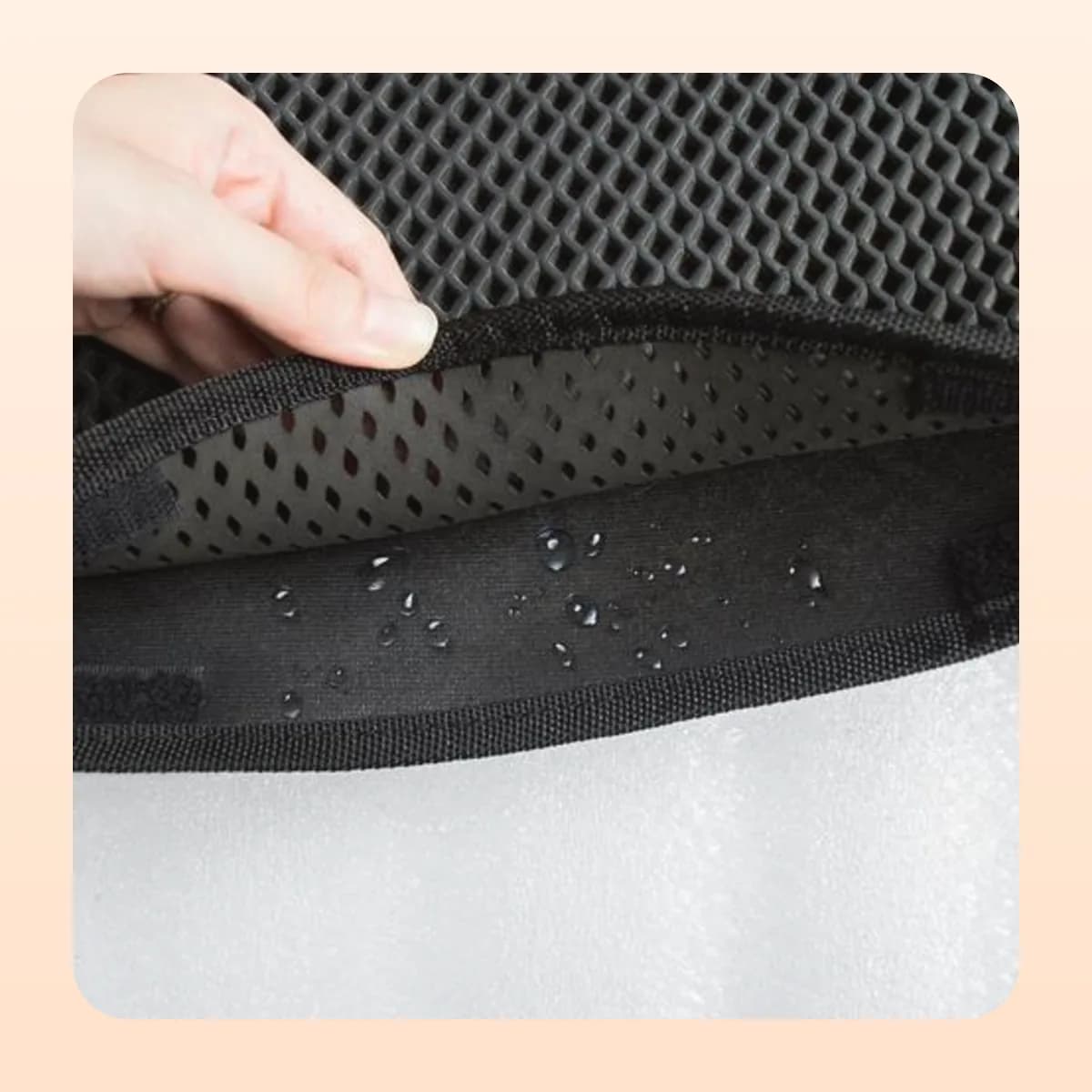
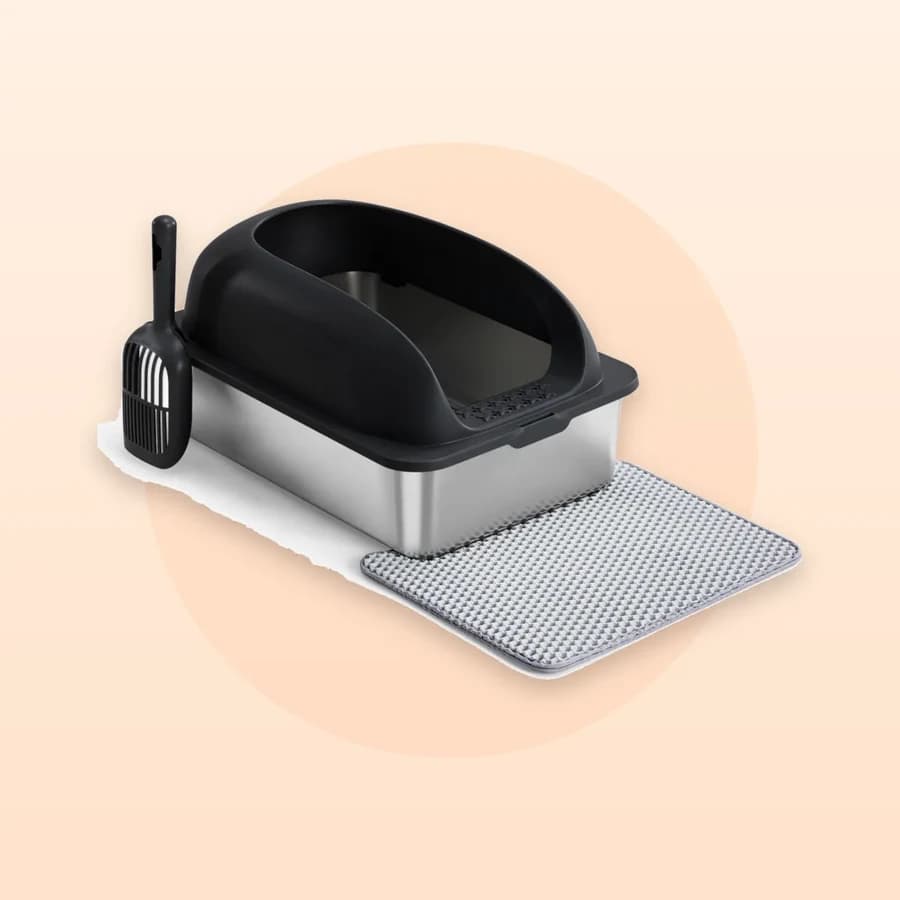
Litter on the floor is a mat problem, not a cat problem. A double-layer mat catches granules through the top sheet and holds them in the cavity underneath, so you tip it out rather than vacuum a corridor. Put it directly in front of the tray, running in the direction the cat leaves.
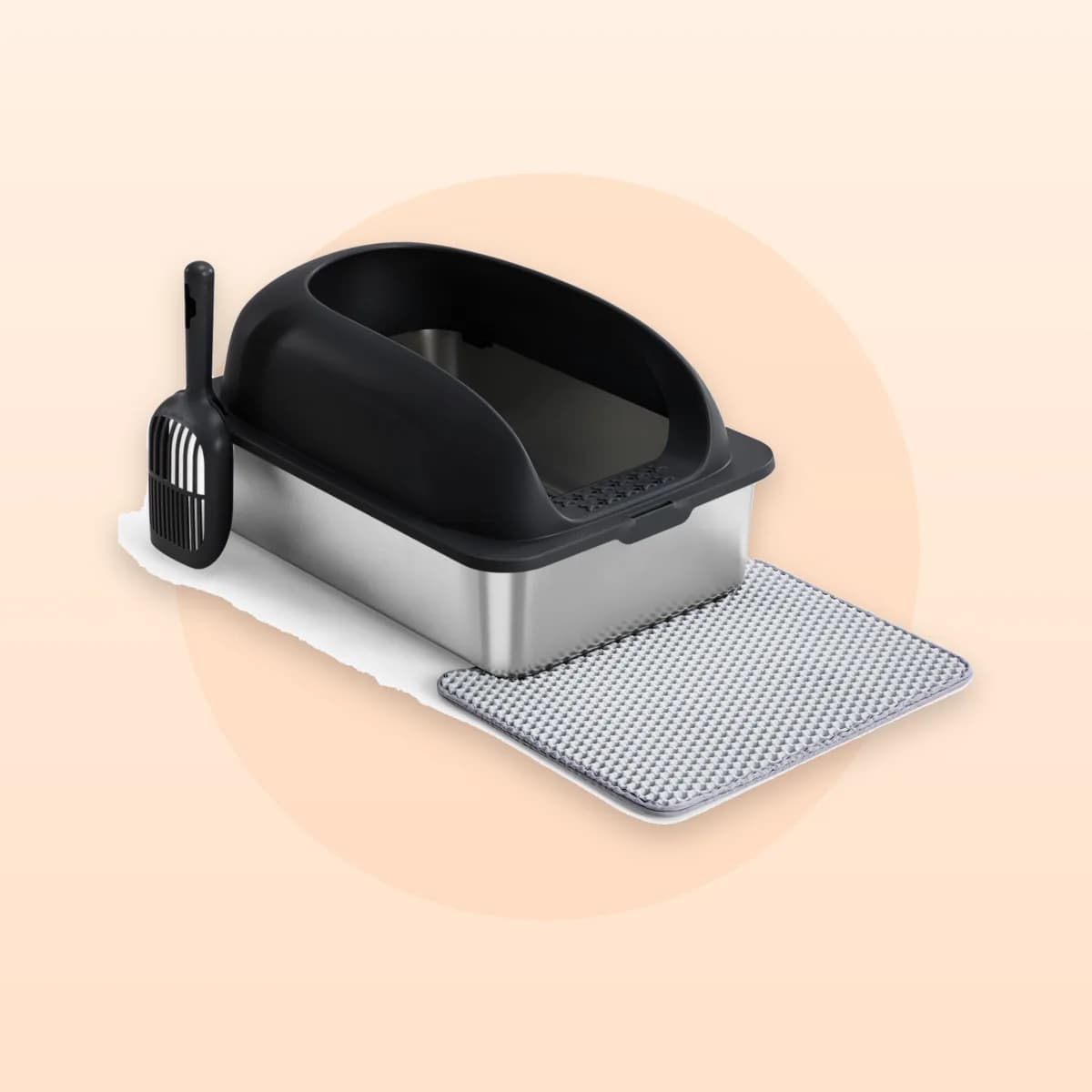
Persistent smell usually means a scratched plastic tray. Claws score the surface, urine soaks into the scratches, and no amount of washing gets it back. Stainless steel does not scratch and does not stain, which is why it outlasts several plastic trays and stops smelling permanently. Avoid scented litter and strongly perfumed cleaners: cats have a far better nose than we do, and a heavily scented tray is one many will simply stop using.
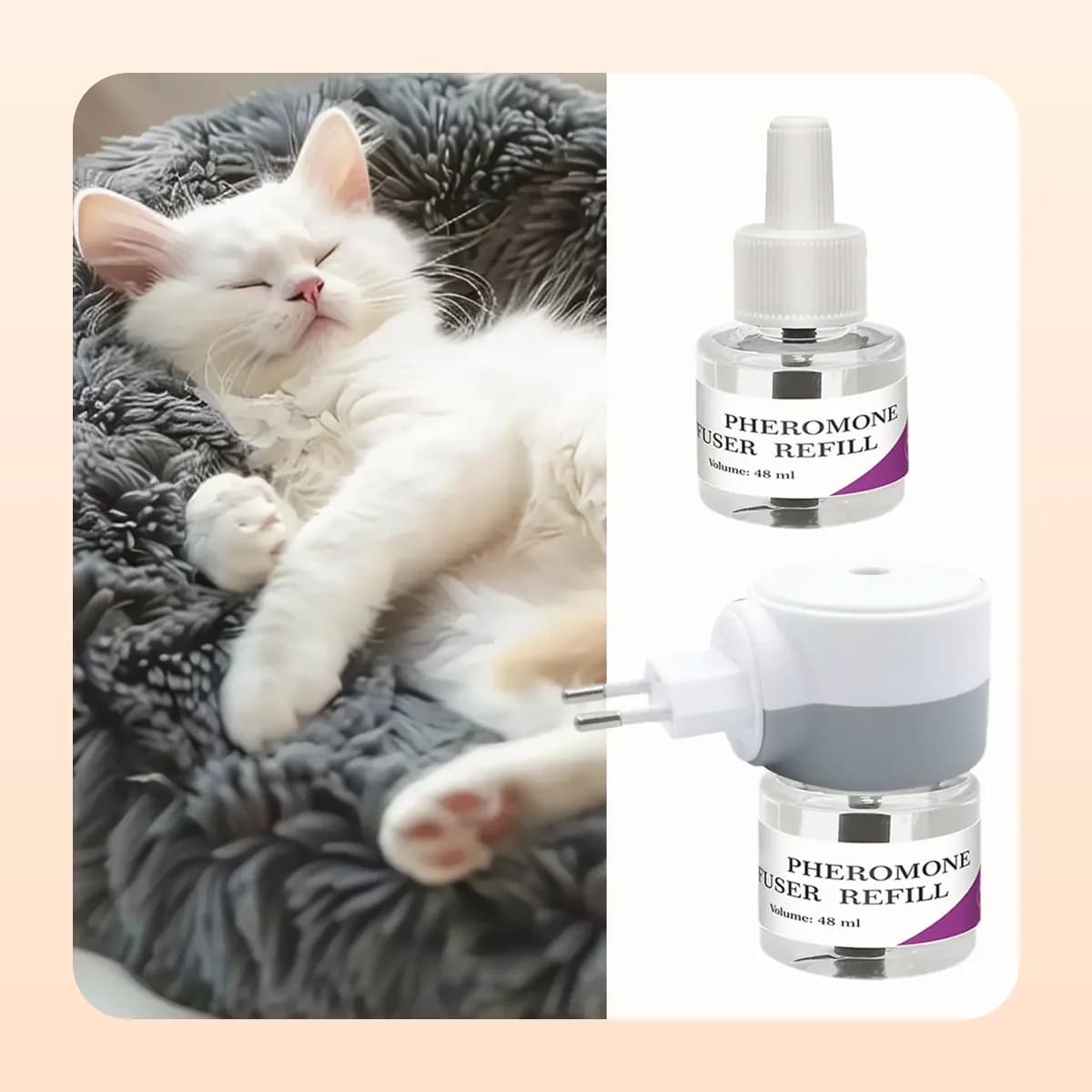
A hood contains smell and litter for you and traps it for the cat, so nervous or older cats often prefer an open, high-sided tray. If your cat perches on the rim or turns to face the door, it wants more space or more visibility. Pheromone diffusers can take the edge off territorial spraying in multi-cat homes, but they support a change in setup rather than substituting for one.
One per cat plus one spare, in different rooms. Two cats need three trays. Lining several trays up in one room counts as a single location to a cat, which defeats the point.
Scoop daily. Clumping litter usually wants a full change every two to three weeks, non-clumping weekly. Wash the tray with unscented soap and hot water at each full change.
A vet check, before anything else, because urinary problems present this way and are painful. Once illness is ruled out, work through tray count, position, depth and litter type in that order.
Open suits more cats, especially older and nervous ones, because it removes the ambush risk and vents the smell. Hoods suit confident cats and owners who need the containment.
Scoop twice a day, strip the tray weekly or fortnightly depending on litter type. If it smells, the schedule isn't your problem.
7 min read
Sources
Last reviewed August 30, 2026