
Fish & Aquariums
How Many Fish Can I Put in My Tank? Honest Stocking Guide
The inch-per-gallon rule has killed more fish than any other piece of aquarium advice. Here's what to use instead.
8 min read
The number your heater is not telling you.
The dial on a heater is a setting, not a reading. A separate thermometer is how you find out that a thermostat has drifted, and drift is what kills tanks quietly.
Taxes calculated at checkout
Colour: Black
Why you'll love it
Cheap heater thermostats drift, and the dial keeps saying what you set it to regardless. An independent thermometer is the only way to know what the water is actually doing.
Rated at ±1 °C, so treat the absolute figure as approximate. What matters is that the same instrument reads the same each morning: a two-degree slide is the warning, whatever the true value.
Stick-on strip thermometers fade and in-tank glass ones break. Probe in, display out means the electronics never sit in the water.
Good fit if
Look elsewhere if
A heater's dial tells you what it has been asked to do, not what the water is actually doing. Thermostats drift with age, and a heater set to twenty-five degrees can be holding twenty-two or twenty-eight after a year without anything looking wrong from the outside.
The failure that matters most is a thermostat sticking closed. The heater then runs continuously, and a small tank can climb several degrees in a few hours. It is one of the more common ways a tank is lost, and it is entirely preventable by looking at an independent reading once a day.
Fish are far more sensitive to change than to any particular number within their range. A tank steady at twenty-four degrees is better than one averaging twenty-five while swinging two degrees either side, because it is the swing that stresses fish and suppresses their immune response.
That is why resolution to a tenth of a degree is useful even though the accuracy is about a degree. You are watching for movement rather than for an absolute figure: a reading that has changed by half a degree since yesterday tells you something even if the absolute number is slightly off.
Put the probe at the opposite end of the tank from the heater, at mid-depth. Next to the heater it reads the warm plume rather than the tank, and right at the surface it reads a layer that is cooler than the body of water. The far end at mid-depth gives the figure that matters.
Keep it out of the direct outflow of a filter for the same reason. The display mounts outside on the glass, which keeps the electronics away from the water entirely and means you can read it without opening the lid, and the probe can stay in permanently.
In the box
How it works
Shop by pet or category to find exactly what your cat or dog needs, no wading through thousands of listings.
Check out securely with card, PayPal or one-tap Apple Pay & Google Pay. Free delivery over $59.
Fast, tracked dispatch straight to your door, and a happier pet before you know it.
The details
Algae grows on the probe like anything else in the tank, and a thick coating slows its response. Wipe it during your weekly water change, and check the lead where it passes over the rim, since that is where a cable is pinched by a lid and eventually fails.
A button cell lasts a long time but it does die, and a dead thermometer is a thermometer telling you nothing at all. Change it as soon as the display starts to dim rather than waiting, and check the reading against a second thermometer occasionally to confirm it has not wandered.
Good questions
About ±1 °C, which is normal at this price. It is reliable for spotting change rather than for calibrating equipment. If you need a precise absolute figure, check it once against a lab thermometer and note the offset.
Yes. The probe and its lead are made to sit in the water; only the display needs to stay dry. Run the lead over the rim rather than pinching it under a lid.
At the opposite end of the tank from the heater, and not right beside the filter outlet. Next to the heater it reads the heater, not the tank.
Around a degree in absolute terms, with resolution to a tenth. That is fine for aquarium use, since you are mostly watching for change rather than needing a precise figure.
Yes, that is how it is meant to be used. The electronics are outside the tank and only the sealed probe sits in the water.
At the opposite end from the heater, at mid-depth, and out of the filter outflow. Beside the heater it reads the warm plume rather than the tank.
Last reviewed August 30, 2026
Advice
The inch-per-gallon rule has killed more fish than any other piece of aquarium advice. Here's what to use instead.
8 min read
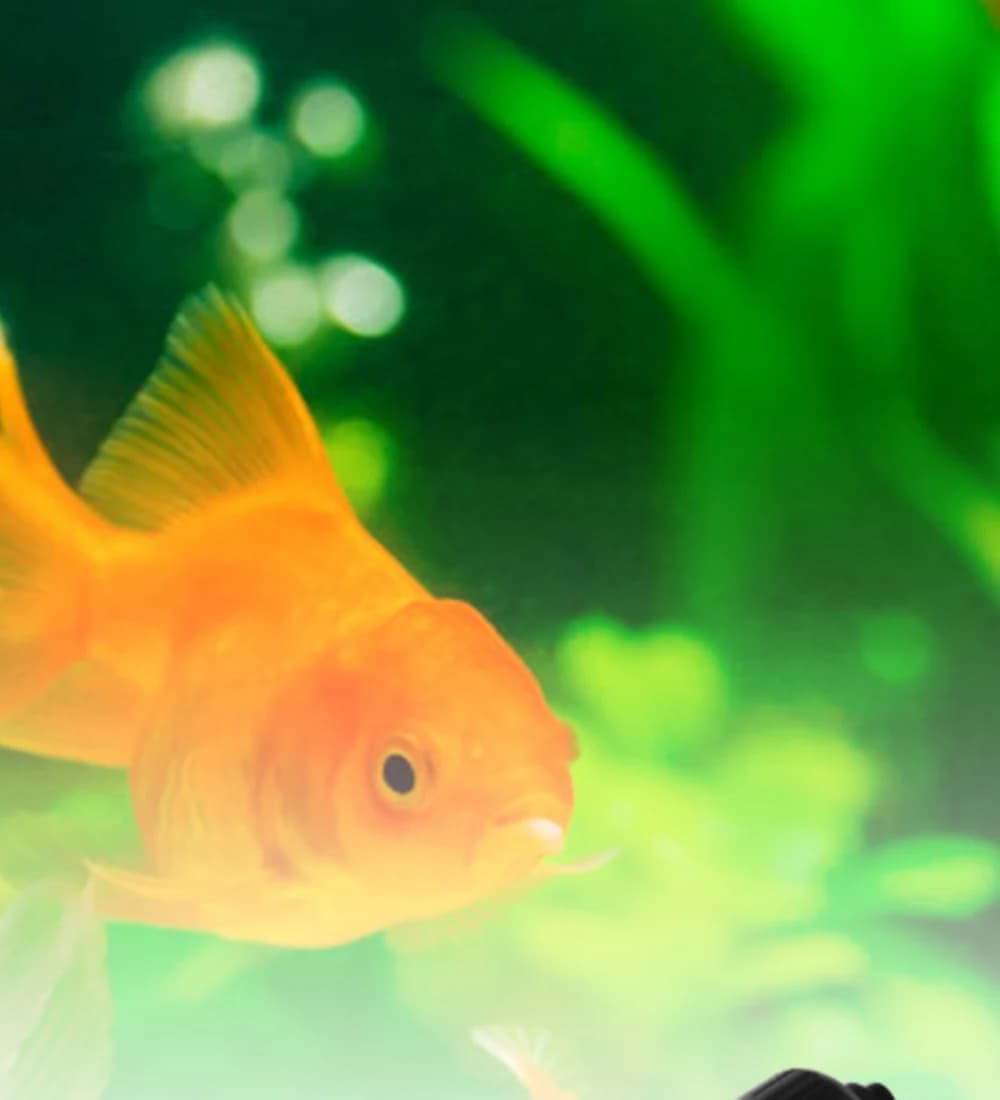
Most new tanks fail in the first month for one reason. Cycling fixes it, takes three to six weeks, and costs about the price of a test kit.
9 min read