Dog Chew Toys That Last: What to Buy by Chew Style

Toys marketed as indestructible are destroyed daily by ordinary dogs. The claim is about marketing rather than materials science, and it's the wrong thing to shop on anyway.
Watch how your dog wrecks things first. The style tells you what to buy.
The four chewing styles
| Style | What it looks like | What to buy | What fails fast |
|---|---|---|---|
| Destroyer | Grips and rips with the back teeth, aims to break it open | Thick solid rubber, one-piece construction | Plush, thin rubber, anything with a seam |
| Gnawer | Settles down and works one spot for an hour | Dense rubber chews, stuffable toys | Cardboard-cored toys, rope |
| Carrier | Carries it everywhere, barely damages it | Plush, soft toys, anything comfortable to hold | Nothing much; these dogs are cheap to keep |
| Shredder | Wants to strip a thing into pieces | Snuffle mats, licki mats, supervised rope | Plush with stuffing, squeakers |
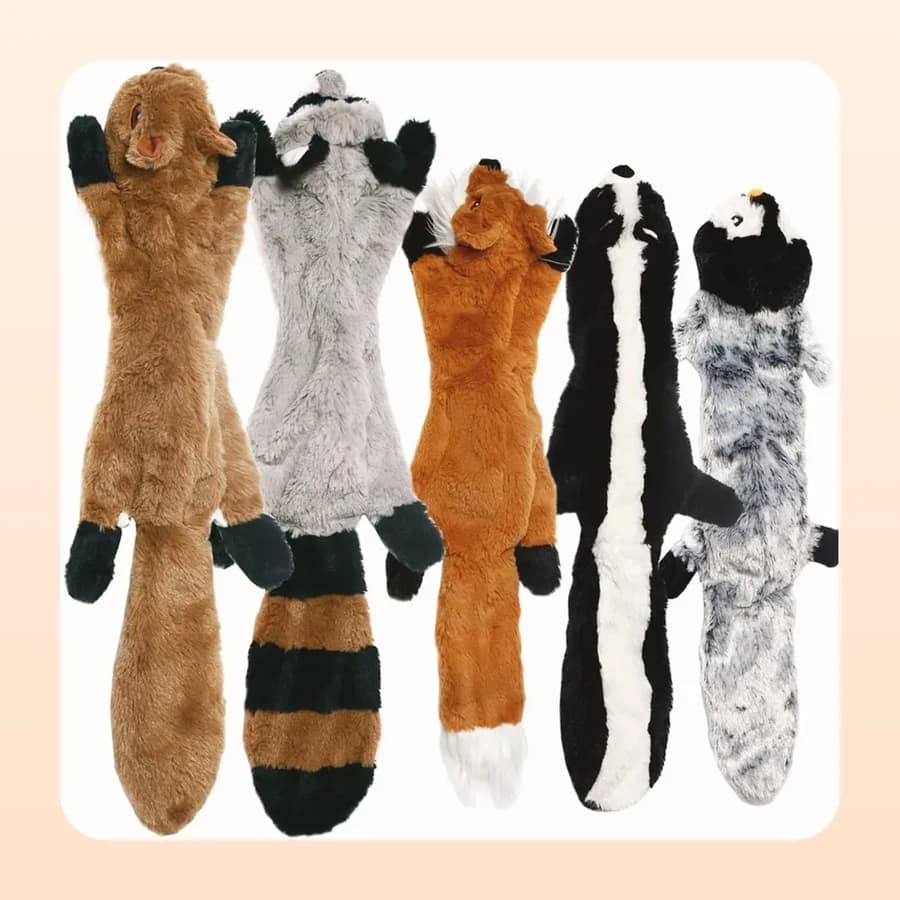
The mismatch that costs most money is buying plush for a destroyer. It lasts an afternoon, and the stuffing and squeaker are a genuine obstruction risk on the way through.
The hardness test
This is the safety rule worth memorising, because the failure mode is expensive and painful.
The toy should have some give. Solid rubber flexes under a bite; a dried antler does not, and the tooth is the softer of the two.
Sizing
Too small is a choking hazard, and it's the mistake people make with dogs that grow. Buy a toy that cannot fit entirely behind the back teeth, and re-check as puppies grow. A ball that was fine for a five-month Labrador is a windpipe-sized object for the adult.
Solid balls are worth a specific warning: a smooth ball just big enough to lodge in the throat is very hard to remove, and there's no gap to breathe through. Balls with a hole through the middle, or ones clearly too large to swallow, avoid the problem entirely.
Making a toy last longer
- 1Rotate. Keep two-thirds of the toys away and swap weekly. A toy that's been out of sight for a fortnight comes back interesting, and interest is what stops a dog from methodically destroying something out of boredom.
- 2Stuff and freeze. Wet food or plain yoghurt inside a rubber chew, frozen overnight, turns a five-minute toy into a forty-minute one and shifts the dog from destroying to licking.
- 3Supervise rope. Rope toys are good for tugging and dangerous when swallowed, because the strands can bunch in the intestine. Take them away when unsupervised.
- 4Retire early. When a piece can be bitten off, it's finished. That's earlier than most people think.
When chewing is a symptom
A dog that chews destructively only while you're out, and particularly one that targets doors, window frames and exit routes, isn't bored. That's separation-related behaviour, and no toy fixes it. It needs a proper behaviour plan, and it responds well to one.
Puppies chew hardest between four and seven months while the adult teeth come through, and again around adolescence. Frozen wet flannels and chilled rubber toys help genuinely during teething.
Buy for the style, apply the thumbnail test, size up rather than down, and treat every toy as a consumable. That's the whole method.
Common questions
One-piece solid rubber chews last longest for aggressive chewers, because seams and glued joints are where toys fail. Nothing is genuinely indestructible, so inspect regularly and retire a toy as soon as pieces can be bitten off.
They're a common cause of fractured teeth. If you can't dent the surface with a thumbnail, it's harder than tooth enamel. Slab fractures of the upper fourth premolar usually need extraction under general anaesthetic.
Rotate toys weekly so they stay novel, match the toy to your dog's chewing style, and use stuffed frozen rubber chews to shift the behaviour from destroying to licking. Destruction only when you're out is usually a separation problem, not a toy problem.
Large enough that it can't fit entirely behind the back teeth. Re-check as puppies grow. Avoid smooth solid balls that are close to throat-sized, and choose ones with a hole through the centre.
Sources
We’re a retailer, not a veterinary practice. Anything clinical on this page comes from these, and your own vet knows your animal.

The Kindral Team
Pet supplies buyers & product testers
We buy, unbox and use the kit we sell: beds, feeders, tanks, harnesses, the lot. We write about what holds up and what doesn't, and we say plainly when a product isn't right for a particular pet. We are not veterinarians: anything touching health, diet or medication is sourced to a qualified body and linked, and we'll always tell you to ask your own vet about your own animal.