Bird Perches: Why the Ones in the Box Are Wrong

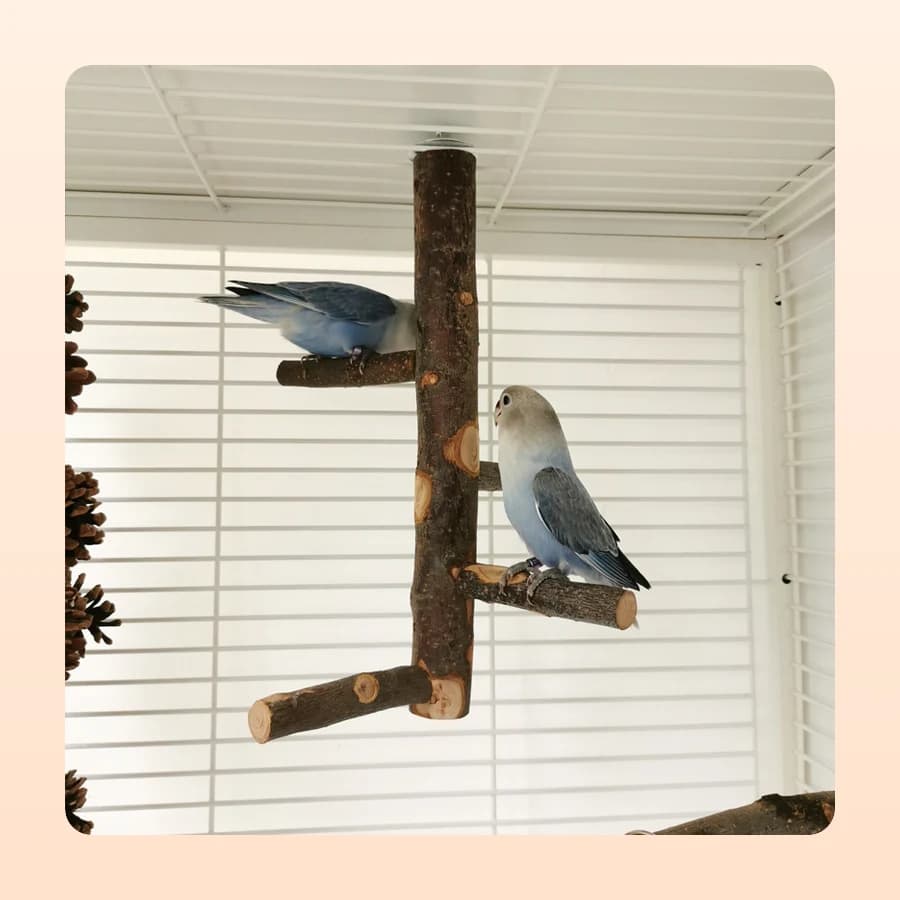
Buy a cage and it arrives with two or three smooth wooden dowels, all the same diameter, mounted parallel. It looks tidy. It's the worst arrangement you could design for a bird's feet.
Why uniform perches cause problems
A bird spends effectively its entire life standing. On a perch of constant diameter, the foot closes to exactly the same angle every time, and the weight lands on the same few points on the sole. There's no variation, and no relief.
Over months that produces flattened, reddened areas on the bottom of the foot, and eventually ulcerated pressure sores. The condition is called pododermatitis, or bumblefoot. It's painful, it's slow to treat, and it's largely preventable by making the foot work differently through the day.
In the wild a bird lands on hundreds of different branches, at different thicknesses and angles, with bark and irregularities. That variation is the point.
What to put in instead
The aim is variety, not one perfect perch. Three or four perches of genuinely different diameters and textures beats any single upgrade.
- Natural branch: the default. Bark texture and a diameter that changes along the length, so the foot repositions as the bird moves.
- Rope perch: flexible, comfortable, good for gripping. Check for fraying weekly, because loose threads catch toes.
- Platform or flat perch: lets the bird stand flat-footed and take weight off the toes entirely. Valuable for older or arthritic birds.
- Cement or mineral perch: one only, positioned somewhere the bird passes through rather than sleeps, to help wear the nails. Never as a main perch.
The rough guide on diameter: the bird's toes should wrap roughly two-thirds to three-quarters of the way around the main perch, not meet all the way round and not stretch flat.
Safe and unsafe woods
| Safe | Avoid |
|---|---|
| Apple, pear, plum (dried) | Cherry (bark and leaves contain cyanogenic compounds) |
| Willow | Yew (highly toxic) |
| Hazel | Oak (tannins) |
| Beech | Laburnum (toxic) |
| Ash, elm | Anything treated, painted or pressure-treated |
If you're cutting your own, take from a tree you can identify, away from roadsides and anywhere that's been sprayed. Scrub with hot water, then bake at around 100°C for an hour to kill mites and larvae, and let it dry fully.
How to arrange them
- 1Put the sleeping perch at the highest point. Birds instinctively roost high, and they'll use the highest available spot regardless of what you intended.
- 2Keep food and water bowls below or beside perches, never directly underneath one. Droppings land straight down.
- 3Leave a clear flight path. Two or three wingbeats between the main perches, with nothing in the way. Cages packed with perches and toys leave nowhere to fly.
- 4Vary the height. Perches at several levels encourage climbing and movement, which is exercise.
- 5Position one perch where the bird can see out of the cage at your eye level, so it can be part of the room.
Maintenance
Natural wood perches are consumables. Birds chew them, which is the point, and they get soiled. Scrub weekly with hot water and a brush, replace when they're chewed thin or won't come clean.
Budget for replacing a couple a year and treat the chewing as free enrichment rather than damage.
Two natural branches of different thicknesses, one rope perch and one flat platform covers almost every bird's needs. It costs less than most single toys.
Common questions
Natural branch perches of varying diameter, plus a rope perch and a flat platform. Variety matters more than any single type, because it stops the foot from holding one position all day.
No. They abrade the skin on the underside of the foot and contribute to bumblefoot, the condition they're marketed as helping. Use varied natural perches instead, and have nails trimmed by a vet or avian groomer.
Apple, pear, plum, willow, hazel, beech, ash and elm. Avoid cherry, yew, oak and laburnum, and anything treated or painted. Bake home-cut branches at around 100°C for an hour to kill mites first.
Three or four of different diameters and textures, at varying heights, with a clear flight path of two or three wingbeats between the main ones. Keep the highest one as the sleeping perch and don't put bowls directly beneath any perch.
Sources
We’re a retailer, not a veterinary practice. Anything clinical on this page comes from these, and your own vet knows your animal.

The Kindral Team
Pet supplies buyers & product testers
We buy, unbox and use the kit we sell: beds, feeders, tanks, harnesses, the lot. We write about what holds up and what doesn't, and we say plainly when a product isn't right for a particular pet. We are not veterinarians: anything touching health, diet or medication is sourced to a qualified body and linked, and we'll always tell you to ask your own vet about your own animal.