Aquarium Lighting: How Long, How Bright, and Algae

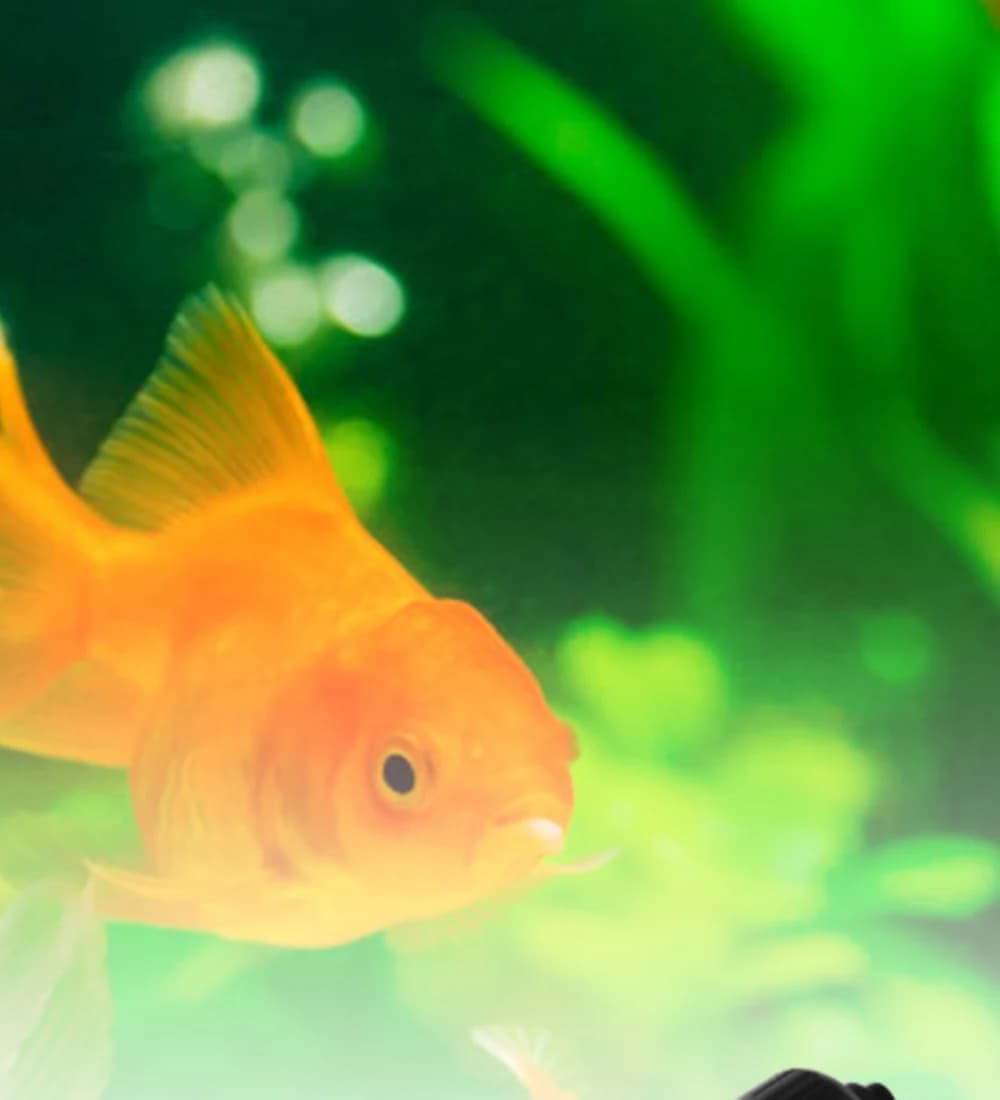
New tank, new light, and the instinct is to run it all evening because that's when you're looking at it. Three weeks later the glass is green and the plants have thinning leaves.
Light is the one input in a tank where more is reliably worse.
What each part of the tank wants
Fish need very little. What matters to them is a consistent day-night cycle for their circadian rhythm, plus somewhere shaded to retreat to. A brightly lit bare tank stresses most species, which is why fish in planted tanks with floating cover behave more confidently and colour up better.
Plants need real intensity, and how much depends entirely on the species. Java fern, anubias and cryptocorynes grow under almost nothing. Carpeting plants and most stem plants need considerably more, and usually CO2 alongside it.
Algae wants exactly what plants want, and it's faster to exploit any surplus. That's the entire dynamic: plants and algae compete, and excess light tilts it towards algae because the plants can only use so much before some other nutrient runs out.
Photoperiod
| Tank type | Hours per day | Notes |
|---|---|---|
| Fish only, no live plants | 6–8 | Purely for viewing and rhythm |
| Low-tech planted (no CO2) | 6–8 | Longer will feed algae before it helps plants |
| High-tech planted (CO2 injected) | 8–10 | Only once CO2 and ferts are dialled in |
| New tank, first 6 weeks | 5–6 | Deliberately low while things stabilise |
| Tank with an algae problem | 4–6 | Cut first, before buying anything |
A useful trick if you want the tank lit in the evening but not for ten hours: split the photoperiod. Three hours in the morning, a gap of three or four hours, then four hours in the evening. Plants handle the interruption fine and many algae types cope with it badly.
Brightness and colour
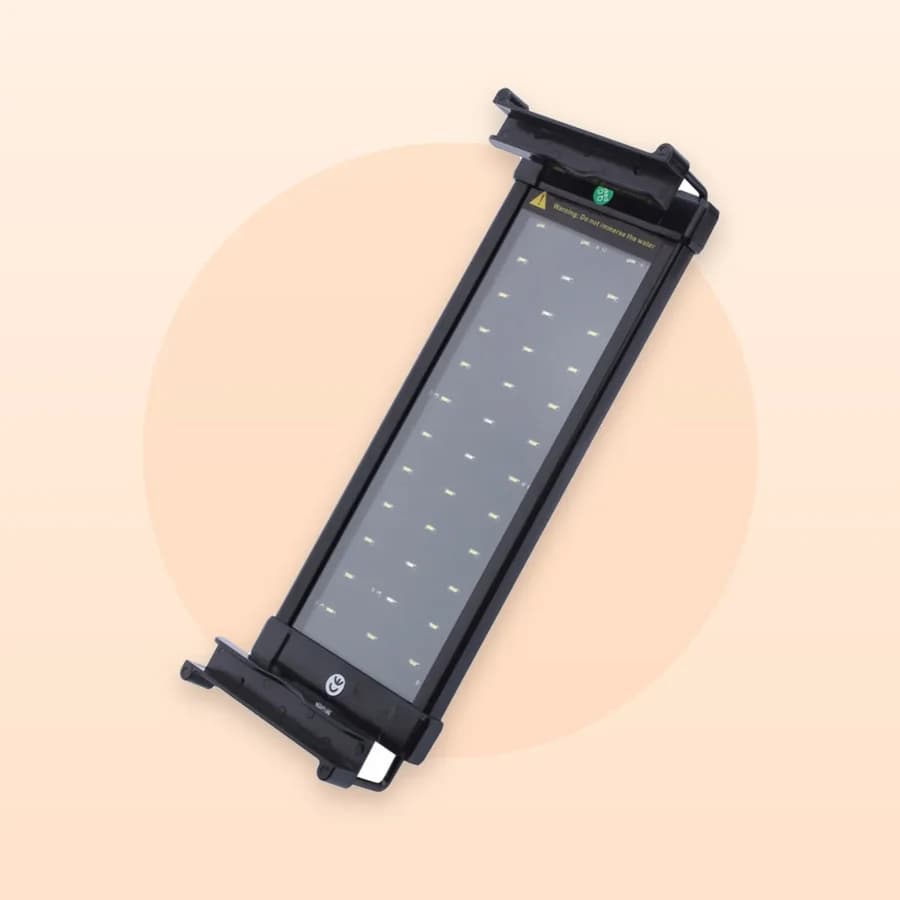
Modern LED units are bright enough for most planted tanks, and the specification worth checking is whether the output is adjustable. A fixed high-output light over a low-tech tank is difficult to work with, because your only lever left is time.
On colour temperature, somewhere between 6500K and 7500K renders plants and fish naturally and suits plant growth. The heavily pink and purple 'plant grow' spectrums make a tank look strange and offer little practical advantage in a freshwater setup.
Ignore watts. It was a rough proxy in the fluorescent era and means nothing across LED units.
Diagnosing an algae problem by type
| What you see | Usual cause | First move |
|---|---|---|
| Green water, cloudy | Too much light, often sunlight | Blackout 3 days, move the tank |
| Green spot on glass | Normal in a healthy tank | Scrape weekly, no action needed |
| Brown dust on everything | New tank, silicates settling | Wait it out, it passes in weeks |
| Black brush / beard | Unstable CO2, poor flow | Improve circulation, cut light |
| Long green hair strands | Excess light and nutrients | Cut photoperiod, manual removal |
Brown diatom algae in a tank under two months old is close to universal and resolves without intervention. People buy remedies for it constantly and it would have gone anyway.
Sunlight
Don't put a tank where the sun reaches it. Sunlight is far more intense than any aquarium light, it's uncontrollable, it varies by season, and it heats the water. A tank in a sunny window is a green tank, and it stays green until it's moved.
Set a timer to seven hours, add floating plants for cover, keep the tank out of the sun, and reach for the timer before you reach for a bottle.
Common questions
Six to eight hours a day for most tanks, set on a timer for consistency. High-tech planted tanks with CO2 can run 8–10. Longer photoperiods feed algae faster than they help plants.
No, and they need darkness. Fish rely on a day-night cycle for rest, and constant light is stressful. Blue moonlight settings are for viewing, not for the fish, and are best left off overnight.
Usually yes. Algae exploits surplus light faster than plants can use it, so excess intensity or an over-long photoperiod tips the balance. Cut the photoperiod before buying any treatment.
6500K to 7500K renders fish and plants naturally and supports plant growth well. Heavily pink or purple grow spectrums offer little practical benefit in a freshwater tank and make colours look odd.
Sources
We’re a retailer, not a veterinary practice. Anything clinical on this page comes from these, and your own vet knows your animal.

The Kindral Team
Pet supplies buyers & product testers
We buy, unbox and use the kit we sell: beds, feeders, tanks, harnesses, the lot. We write about what holds up and what doesn't, and we say plainly when a product isn't right for a particular pet. We are not veterinarians: anything touching health, diet or medication is sourced to a qualified body and linked, and we'll always tell you to ask your own vet about your own animal.