Bird Cage Size Guide: Minimums by Species

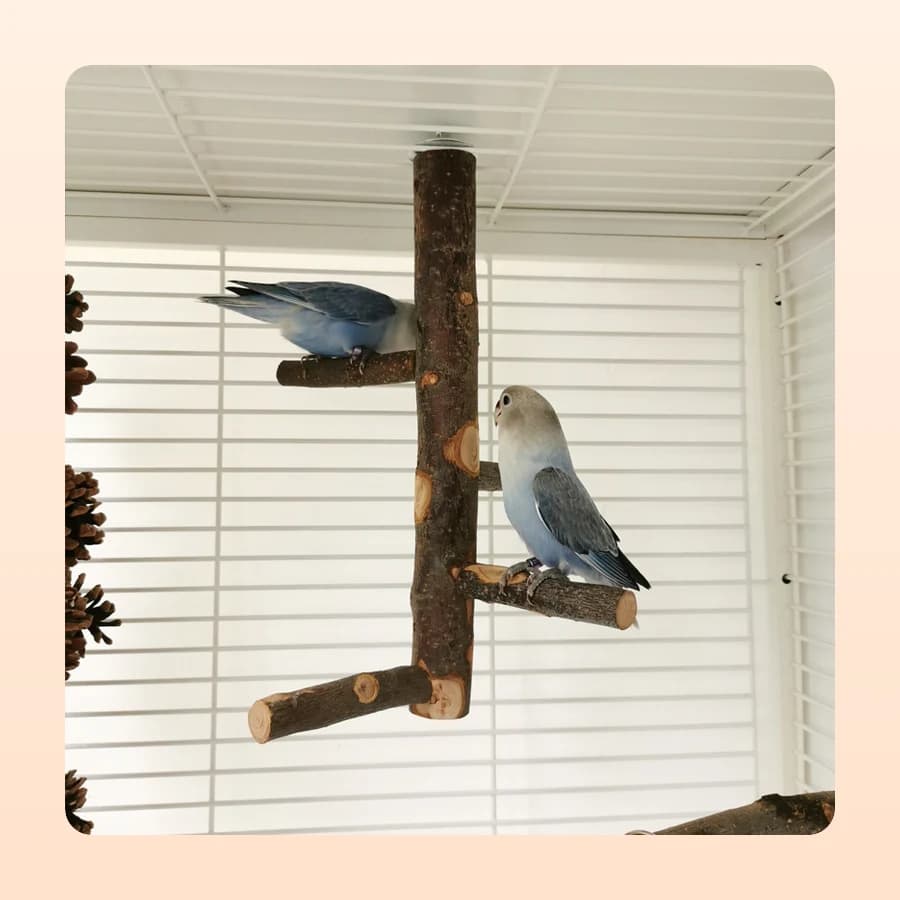
Pet shop cage labels are close to useless. A cage sold as suitable for a cockatiel is frequently a budgie cage with a bigger price, and 'minimum' on the box tends to mean the smallest box the bird can survive in rather than live well in.
Minimum dimensions by species
These are floors for a single bird, with perches and toys already installed. A pair needs more, and any bird spending most of its day caged needs considerably more.
| Species | Minimum W x D x H | Bar spacing |
|---|---|---|
| Budgerigar | 60 x 45 x 45 cm | 10–12 mm |
| Cockatiel | 60 x 60 x 75 cm | 15–18 mm |
| Lovebird | 60 x 60 x 60 cm | 12–15 mm |
| Conure | 75 x 60 x 90 cm | 18–20 mm |
| African Grey | 90 x 75 x 120 cm | 20–25 mm |
| Canary / finch | 75 x 40 x 45 cm (width critical) | 10–12 mm |
Finches are the ones people get wrong most often. They rarely climb and almost never use height, so they need a long cage to fly across. A tall round cage is the worst possible shape for them.
Why bar spacing is a safety spec
This isn't a comfort preference. A bird that can push its head between two bars but not pull it back out will panic, and birds have died in cages bought for a larger species.
Get it wrong the other way and a small bird in wide-barred housing simply squeezes out. Budgies in a cage built for a conure escape routinely.
The test that beats any table
Put the perches and toys in first, then check three things with the bird inside:
- 1It can fully extend both wings without touching anything, while standing on the main perch.
- 2It can turn around on the perch without its tail hitting the bars. Long-tailed birds like cockatiels need more depth than people expect for this reason alone.
- 3There is at least one clear flight path of two or three wingbeats between perches.
If a cage passes the table but fails the third test because it's packed with toys, it's too small for how you're using it.
Perches matter more than most people think
The dowel perches that come with almost every cage are a uniform diameter, which means the bird's foot holds the identical position all day. Over months that causes pressure sores on the base of the foot, a condition called bumblefoot.
Replace them. You want varied diameters and irregular natural surfaces, so the foot works differently on each perch. Apple, willow and hazel are safe woods and cost nothing if you have access to a garden.
Cage size doesn't fix everything
A bigger cage is better than a smaller one and it isn't the main welfare lever. Parrots are intensely social and spend a large part of a wild day foraging. A bird in a large cage with no foraging and no company is still a bored bird, and boredom is what produces screaming and feather-destructive behaviour.
What moves the needle: several hours out of the cage daily in a bird-safe room, food presented so the bird has to work for it, and toys that get rotated rather than left until they're ignored.
Placement
- Against a wall, not floating in the middle of a room. A bird with an exposed back stays alert and doesn't settle.
- At roughly chest height. Floor level reads as vulnerable, and well above head height makes handling harder.
- Out of the kitchen. Overheated PTFE non-stick cookware releases fumes that kill birds within minutes, and it is not a rare accident.
- Away from direct sun and draughts, with part of the cage in shade so the bird can choose.
Buy the biggest rectangular cage you can fit and afford, check the bar spacing against the species rather than the label, bin the dowel perches, and give the bird something to do. That order.
Common questions
At least 60 x 45 x 45 cm for a single budgie, with 10–12 mm bar spacing, and more for a pair. Width matters more than height because budgies fly horizontally rather than climbing.
Usually not. Most birds fly across rather than up, so a tall narrow cage wastes its volume. Prioritise width and depth, and make sure a long-tailed bird can turn on the perch without hitting the bars.
10–12 mm for budgies and finches, 15–18 mm for cockatiels, 18–20 mm for conures and 20–25 mm for African Greys. Too wide and a bird can get its head trapped between bars, which can be fatal.
Yes. They offer no corner to retreat to, which keeps stress levels raised, and the bars converge at the top where toes get caught. Choose a rectangular cage regardless of species.
Sources
We’re a retailer, not a veterinary practice. Anything clinical on this page comes from these, and your own vet knows your animal.

The Kindral Team
Pet supplies buyers & product testers
We buy, unbox and use the kit we sell: beds, feeders, tanks, harnesses, the lot. We write about what holds up and what doesn't, and we say plainly when a product isn't right for a particular pet. We are not veterinarians: anything touching health, diet or medication is sourced to a qualified body and linked, and we'll always tell you to ask your own vet about your own animal.