Fish & Aquariums
How Many Fish Can I Put in My Tank? Honest Stocking Guide
The inch-per-gallon rule has killed more fish than any other piece of aquarium advice. Here's what to use instead.
8 min read
The Kindral shop
Overfeeding is the most common mistake in a home aquarium, and it is the one that quietly poisons the water. Uneaten food breaks down into ammonia exactly as fish waste does. The equipment here exists to control portion size and to keep a tank running while nobody is home.
5 products
The working rule is what the fish finish in about two minutes, once or twice a day. That is far less food than it looks like it should be, and a tank of fish that appear hungry is normal rather than a sign of underfeeding. Fish beg on sight of a person because that is how they are built, not because they are starving.
Anything not eaten sinks, breaks down and produces ammonia, which the filter then has to process on top of the normal waste load. A tank with cloudy water, a sudden algae bloom or a nitrate reading that climbs between water changes is usually being fed too much rather than filtered too little. Most adult fish are fine skipping a day entirely, and many keepers build in one.
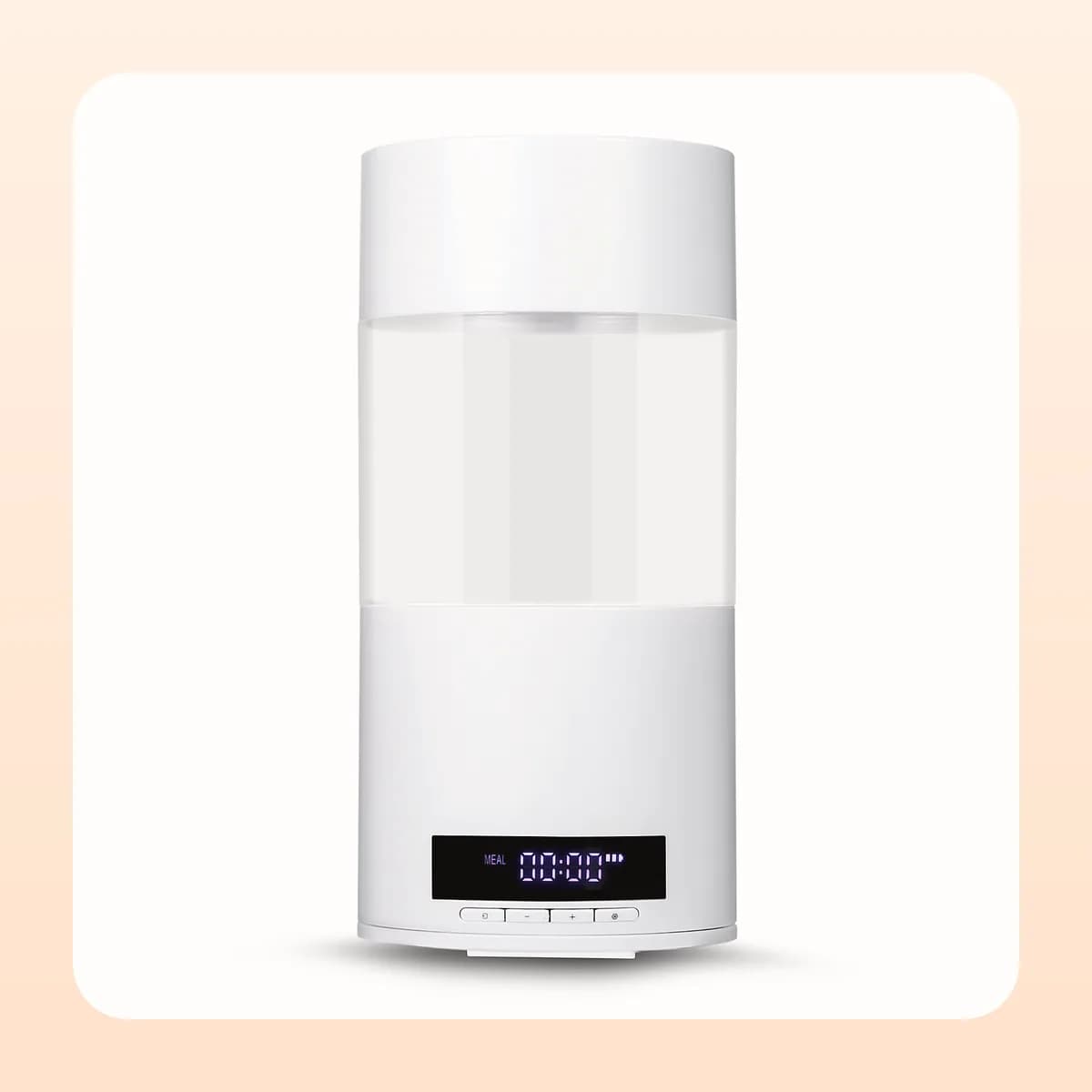
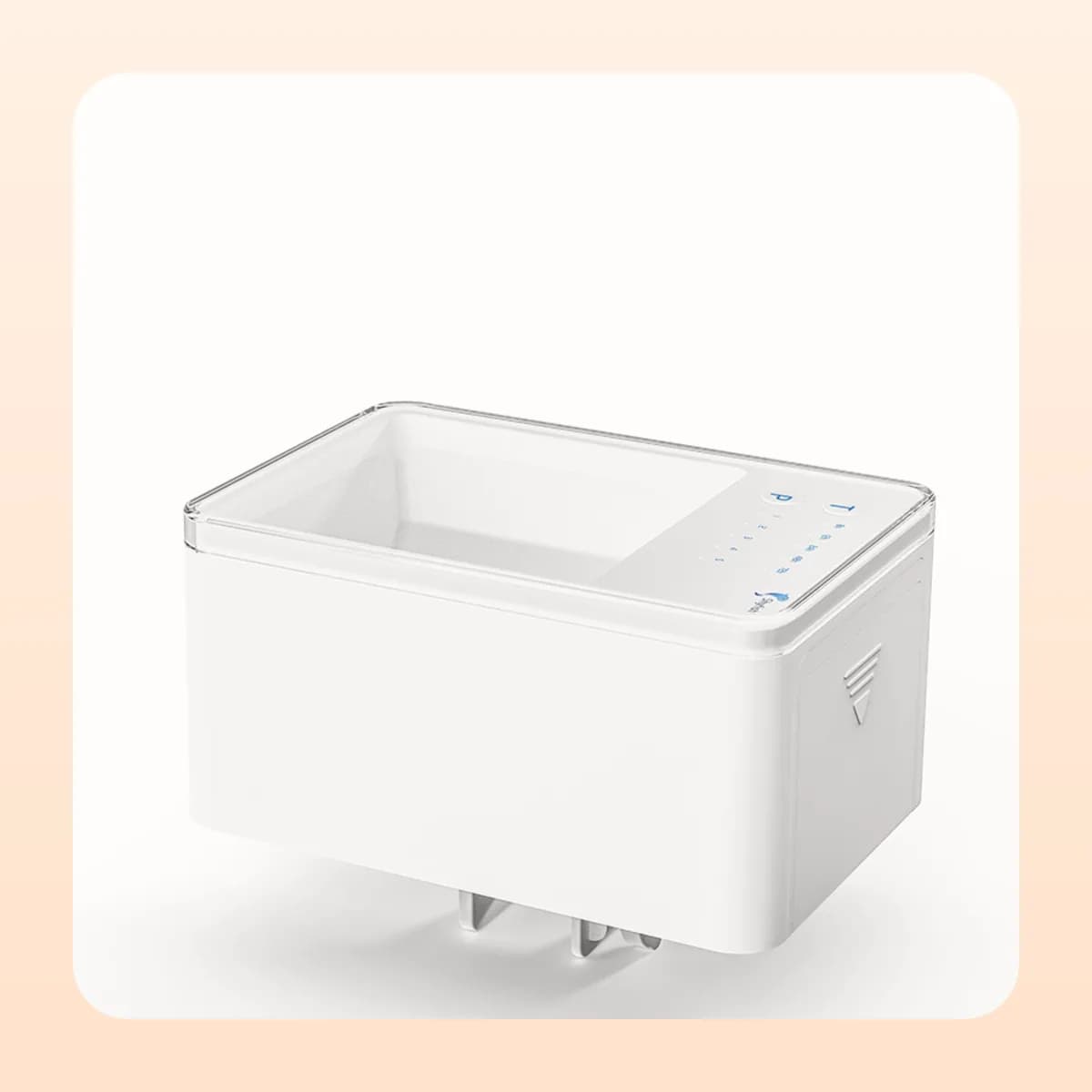
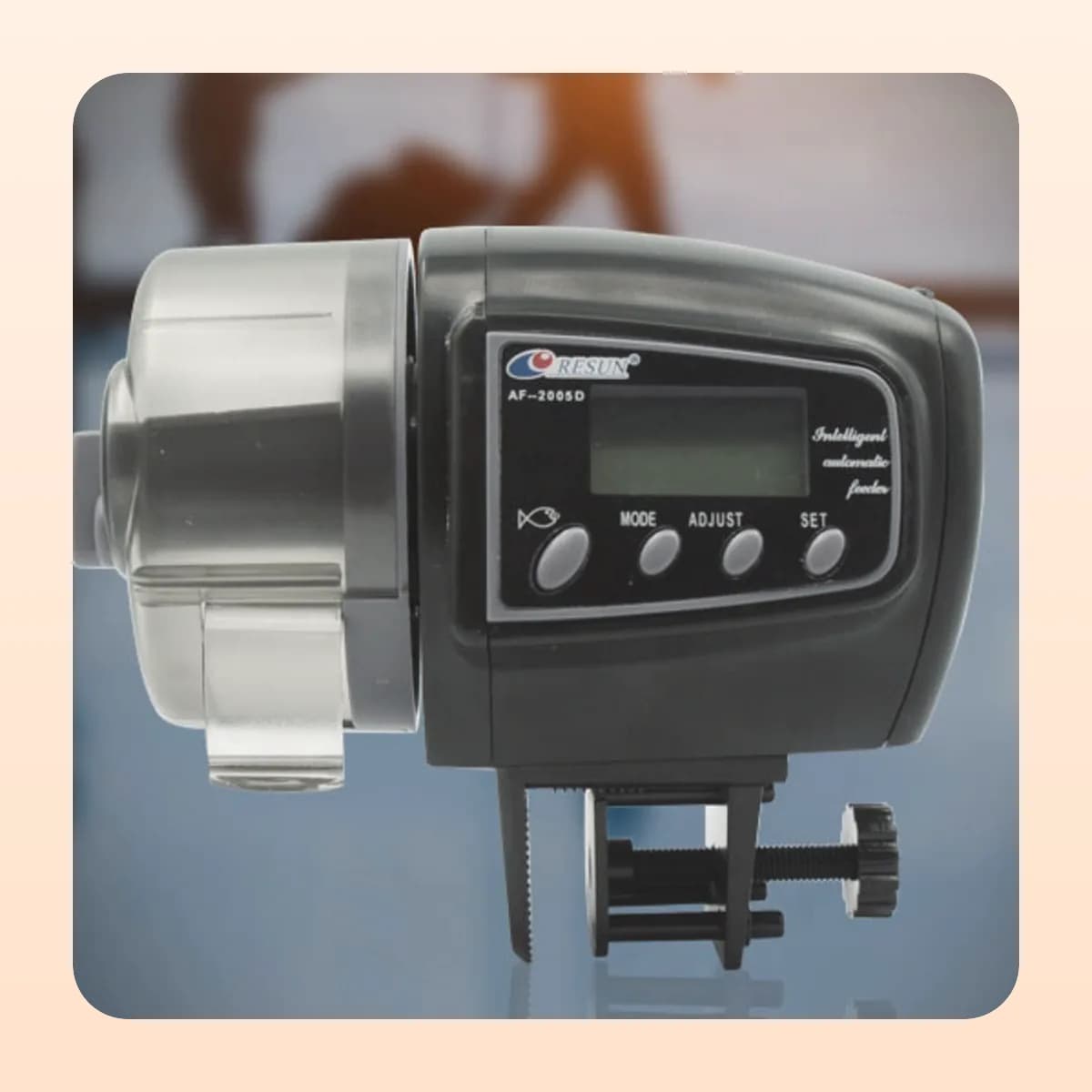
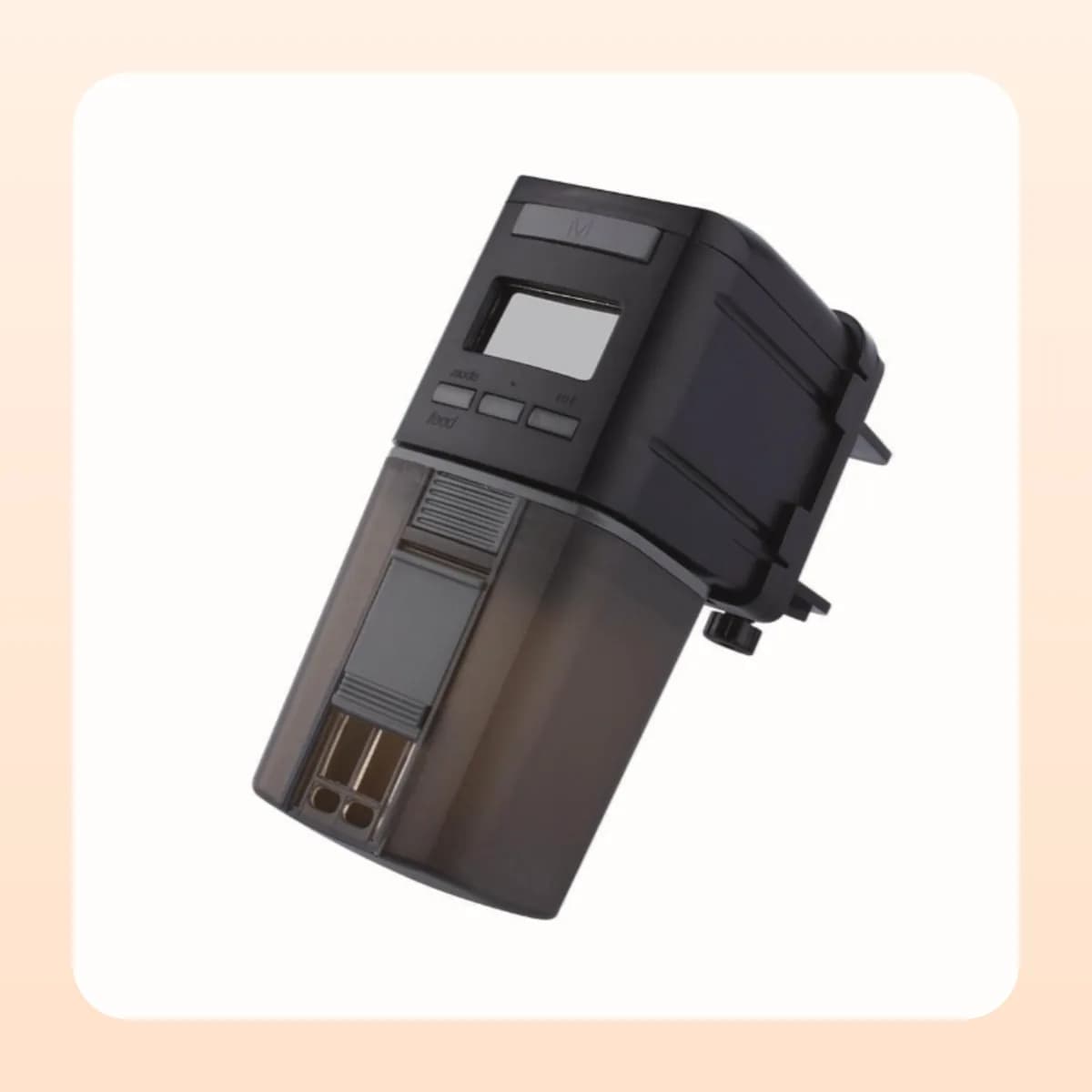
An auto feeder is worth having for consistency as much as for holidays, because it delivers the same small portion at the same time whether or not anyone remembers. Look for an adjustable outlet so you can dial the dose down to what your tank actually needs, and a hopper that seals, because damp flake swells and jams the mechanism.
Run it for at least a week while you are still at home. That is long enough to confirm the portion is right, that the mechanism has not clogged, and that the batteries are healthy. Fitting a feeder the night before a holiday is how people come home to a tank that was either fed nothing for a week or fed the entire hopper on day two.
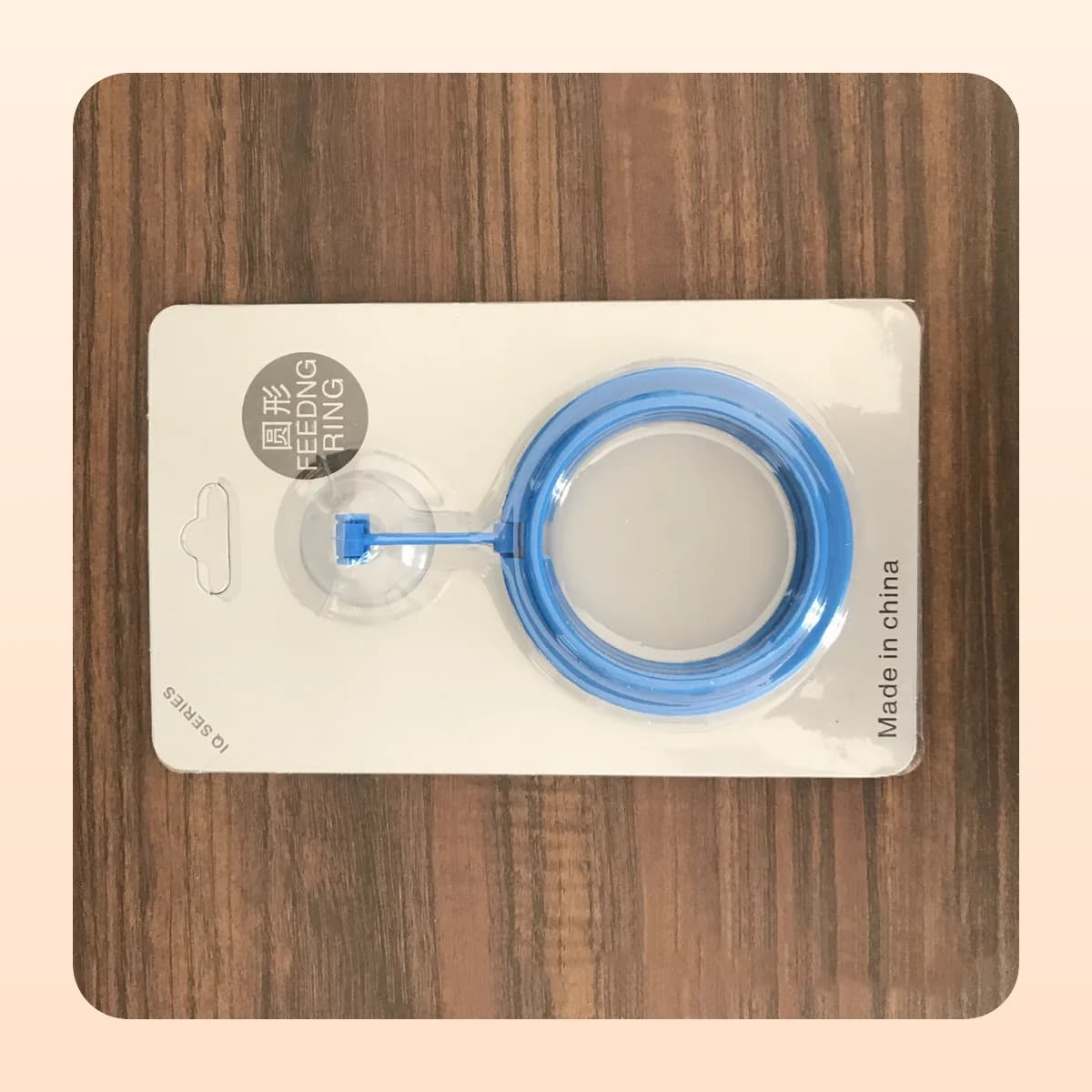
In a tank with a current, floating flake ends up in the filter intake within seconds. A feeding ring floats on the surface and holds the food in one spot until it is eaten, which cuts waste and lets you see what is actually being consumed. It also helps in a community tank where fast mid-water fish would otherwise take everything before slower or bottom-dwelling species notice.
Feed bottom feeders separately with a sinking pellet or wafer after lights out, when the faster fish have settled. Assuming they will live on leftovers is how catfish and loaches end up quietly underfed in a tank that looks well stocked.
Most healthy adult community fish manage a week, and many keepers deliberately fast them one day a week. Fry, and fish that are unwell or newly bought, need feeding daily and should not be left.
Moisture reaching the hopper. Mount it clear of the water surface, use the desiccant compartment if it has one, and keep the tank lid closed so warm humid air is not being drawn into the drum.
Either works if the total is right. Two smaller feeds suit small fish with fast metabolisms; one is fine for most community tanks. Consistency of timing matters more than the number.
Sinking pellets or wafers dropped in after the lights go off, so the faster mid-water fish have settled. Watch once to confirm the food is reaching them rather than being intercepted.
The inch-per-gallon rule has killed more fish than any other piece of aquarium advice. Here's what to use instead.
8 min read
Last reviewed 30 August 2026