Cats
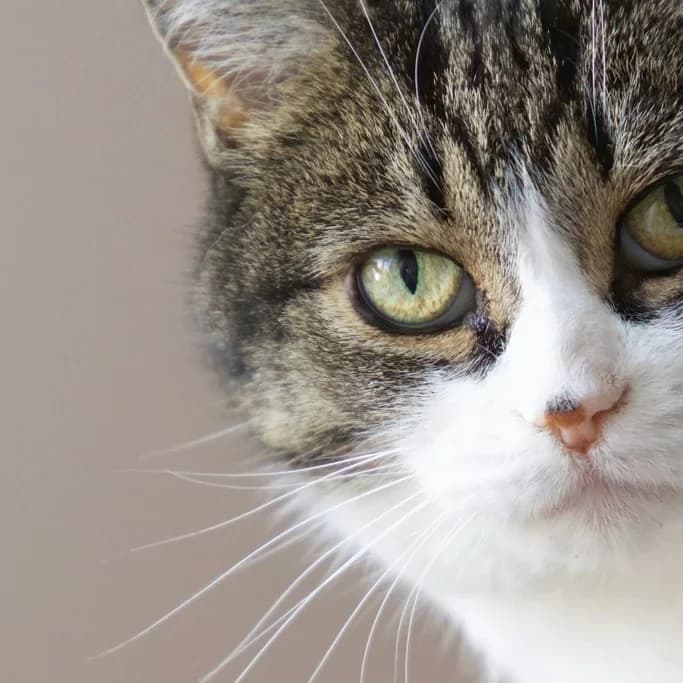
Why Do Cats Knock Things Off Tables? The Real Answer
It isn't spite, and it isn't your cat testing gravity. Four things drive the pawing-off behaviour, and three of them are fixable in a week.
6 min read
A puzzle you can make harder as they learn.
Both ends open independently and adjust, so the difficulty moves with the dog. A puzzle that is solved and then fixed at that setting stops being a puzzle within days.
Taxes calculated at checkout
Why you'll love it
Both hatches open is an easy first week. Narrow them and the same toy takes three times as long, which is the difference between a month of use and a lifetime of it.
Kibble that has to be nudged out a few pieces at a time cannot be inhaled, which takes the edge off the bloating and sick-ups that follow a bolted meal.
Sniffing food through the holes and pushing the toy around burns mental energy, and a dog that has spent it is far less interested in the skirting board.
Good fit if
Look elsewhere if
The usual life cycle of a puzzle toy is a week of enthusiasm followed by indifference. The dog works out the trick, the trick does not change, and there is nothing left to solve. What was mental work becomes a slightly awkward bowl, and the toy goes in a cupboard.
Adjustable hatches change that. Open both wide and food falls out readily, which is the right starting point. Narrow them and the dog has to be more deliberate about the angle and force. Close one entirely and the whole problem changes shape. A toy that can be made harder stays interesting for months rather than days.
Set both hatches fully open for the first few sessions so food comes out within seconds. The dog needs to learn that this object produces food before it will invest any effort in it, and a first encounter that yields nothing teaches exactly the wrong lesson.
Once the dog is working confidently, narrow one hatch. Give it a few days, then narrow the other. Aim for a session that lasts several minutes rather than seconds or forever: a puzzle that takes twenty minutes and ends in the dog walking away frustrated is set too hard and is worth backing off.
The rounded dumbbell ends are deliberate. A ball rolls away in a straight line and ends up under furniture; a weighted dumbbell rocks back towards the middle after each nudge, so it stays in the open where the dog is working rather than needing rescuing every few minutes.
It is not quiet. Hard plastic loaded with kibble being pushed around a hard floor is audible throughout the house, which is worth knowing before you set a dog up with one during a work call. On a rug it is considerably better, and the toy still works.
In the box
How it works
Shop by pet or category to find exactly what your cat or dog needs, no wading through thousands of listings.
Check out securely with card, PayPal or one-tap Apple Pay & Google Pay. Free delivery over £45.
Fast, tracked dispatch straight to your door, and a happier pet before you know it.
The details
Good questions
No. Rinse the chamber in warm soapy water and let it dry fully before refilling, or damp kibble will stick around the hatches.
It is a food-dispensing toy, not a chew toy. Dogs that settle down to gnaw rather than push should be supervised with it.
Hand washing is safer for the adjustable hatches, since repeated hot cycles can distort the mechanism and make the settings unreliable. Warm soapy water and a bottle brush for the chamber.
It is a puzzle toy rather than a chew, so a dog that settles down to grind through plastic should be supervised with it and given a purpose-made chew instead.
Dry pieces up to roughly 1.5 by 2.3 cm, which covers most kibble, small biscuits and cut jerky. Wet food will not dispense and clogs the hatches.
Last reviewed 30 August 2026
Advice
It isn't spite, and it isn't your cat testing gravity. Four things drive the pawing-off behaviour, and three of them are fixable in a week.
6 min read