Cats
Do Cats Really Need a Water Fountain?
Cats are bad at drinking. That's not a quirk, it's a desert ancestry problem, and it shows up later as kidney and bladder disease.
6 min read
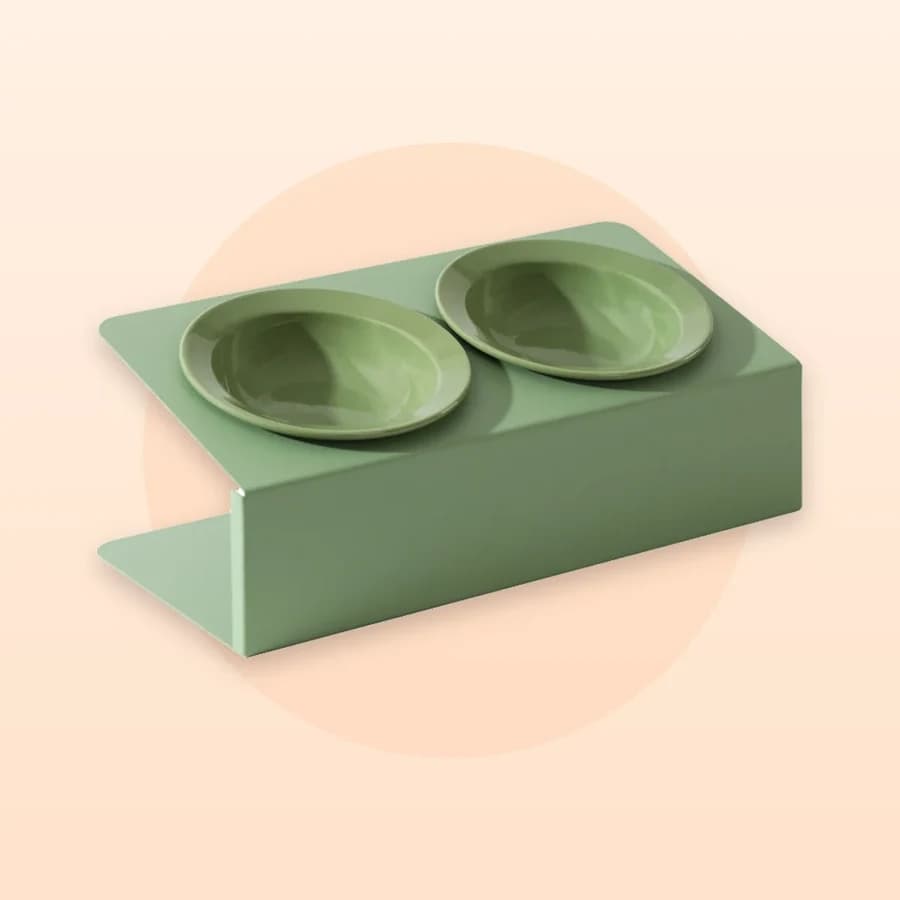
Wide and shallow, so nothing brushes the whiskers.
If your cat scoops food out with a paw, eats only the middle and walks away from a half-full bowl, the bowl is almost certainly touching its whiskers. A wider, shallower dish removes the problem outright.
Taxes calculated at checkout
Colour: Red
Size: Medium
Why you'll love it
They are packed with nerve endings, and a deep narrow bowl presses on them at every mouthful. Some cats respond by pawing food onto the floor and eating it there. A wide dish removes the reason.
Flat bowls strand the last of the food against the far wall, which is where a fussy cat gives up. A tilted floor rolls it to the near edge instead.
Plastic scratches, and scratches hold bacteria and oils that some cats react to around the chin. Glazed ceramic stays smooth and washes properly hot.
Good fit if
Look elsewhere if
Whiskers are not hairs in the ordinary sense. Each one sits in a follicle packed with nerve endings and blood vessels, and they function as a close-range sensing array that tells a cat about air movement, gaps and objects it cannot see under its own chin. That sensitivity is the point of them, and it is also why pressing them against something repeatedly is unpleasant.
A cat's whiskers span roughly the width of its body. In a deep, narrow bowl they brush the sides at every mouthful, and the cat gets a stream of unwanted input while trying to eat. Different cats respond differently. Some pull food out with a paw and eat it off the floor, some eat only from the centre where nothing touches, and some simply walk away from food they are perfectly happy to eat elsewhere.
Width is what keeps the whiskers clear, and shallowness is what stops food gathering in a deep well the cat has to push its face into. The tilt does something separate: it brings the food up towards the cat so the last mouthfuls sit within easy reach rather than at the bottom of a bowl the cat has to crane down into. Older cats and those with any neck or shoulder stiffness feel that difference most.
Weight matters more than it appears to. A light bowl skates across a tiled or laminate floor as the cat eats, and a bowl that moves away from the cat gets chased around the kitchen, which is a mild irritation for you and a genuine annoyance for the animal. A heavy ceramic body stays where it is put.
Glazed ceramic is worth choosing over plastic for a reason beyond the look. Plastic scratches with use, and the scratches hold bacteria and food residue that washing does not fully clear. In some cats that leads to feline chin acne, the crop of small black spots along the underside of the chin that owners usually mistake for dirt.
A glazed surface has nowhere for residue to lodge and it holds no smell, which is worth something with wet food. Wash it daily, and check the glaze occasionally for chips, since a chipped edge exposes porous ceramic underneath and should be retired.
In the box
How it works
Shop by pet or category to find exactly what your cat or dog needs, no wading through thousands of listings.
Check out securely with card, PayPal or one-tap Apple Pay & Google Pay. Free delivery over £45.
Fast, tracked dispatch straight to your door, and a happier pet before you know it.
The details
| Size | Dimensions | Best for |
|---|---|---|
| Medium | 13.5 × 13.5 × 11 cm | Most adult cats, and kittens from about six months |
| Large | 16.5 × 16.5 × 14 cm | Large breeds, long-whiskered cats, and small dogs |
Choose on whisker span rather than appetite. Measure your cat's whiskers tip to tip and pick the bowl wider than that figure, since the point of the shape is that nothing touches them while it eats.
Good questions
Probably not, and the supplier's listing claiming it reduces vomiting goes further than the evidence does. Cats that bring food back up usually eat too fast, and a slow feeder is the tool for that, not a raised bowl.
It is debated. What is not debated is that whiskers are highly sensitive and some cats visibly dislike deep bowls. If yours paws food out onto the floor, a wide dish is worth trying.
Medium suits most cats. Large is for big breeds and for households feeding wet food in bigger portions.
The usual signs are pawing food out of the bowl, eating only from the centre and leaving a ring around the edge, or walking away from food it will happily eat off a plate. Offering the same food on a flat dish is the quickest test.
Yes, and for the same reason. Cats also dislike dipping their whiskers to drink, and a wide shallow water dish placed away from the food is one of the simplest ways to increase intake.
It is, and the glazed surface is easier to clean after wet food than plastic. Wash it after each wet meal rather than topping it up, since residue left in a warm kitchen is what puts cats off a bowl.
Last reviewed 30 August 2026
Advice
Cats are bad at drinking. That's not a quirk, it's a desert ancestry problem, and it shows up later as kidney and bladder disease.
6 min read